PEXX is a modern fintech platform that offers instant USD access for users worldwide through stablecoin rails. It handles cross-border payments, remittances, and yield-bearing wallets to make global money movement simple and cost-effective.
The service has gained traction by cutting fees and wait times for digital nomads, freelancers, and remote workers. Users report saving on FX spreads and enjoying fast transfers, which helps them manage international revenue more efficiently.
“People didn’t want another place to speculate; they wanted a dollar account that uses those same stablecoin rails for everyday money movement.”


Marcus brings experience from building Oneflare in Australia and Zipmex in Southeast Asia. His focus on practical financial solutions has positioned PEXX as a key player in borderless banking.
Marcus shared his thoughts on….
The shift from crypto trading to real USD banking, the growth of the global generation, and strategies for TradFi-DeFi convergence. He also covered competitive advantages in transfer speeds and plans for expansion in Asia, Latin America, and the Middle East.
We’ll cover his views on challenging geography-based financial services, delivering true financial inclusion, and tools for entrepreneurs handling affiliate payments and multi-currency operations.

Q.1 Marcus, you’ve built and scaled companies from Australia’s service marketplace Oneflare to Southeast Asia’s crypto exchange Zipmex, and now PEXX.
What specific moment made you realise that the future of finance wasn’t just about crypto trading, but about giving anyone with a passport true USD banking access?
After five years running a crypto exchange, the trading dashboards told a clear story. In bull markets Bitcoin pairs topped the charts, but whenever sentiment turned bearish, the heaviest volume shifted to stablecoin-to-fiat pairs—often making up 20–40% of all trades. Customers were using USDT and USDC as a stand-in for reliable dollar banking: settling invoices, meeting payroll, and hedging local-currency risk.
That data point made the opportunity obvious—people didn’t want another place to speculate; they wanted a dollar account that leverages those same stablecoin rails for everyday money movement. PEXX was built to provide exactly that: instant, border-agnostic USD access for anyone with a passport and a phone.
Q.2 You claim PEXX fills “three gaps no single provider closes” – what legacy banks won’t offer, what crypto exchanges can’t deliver, and what neo-banks still lack.
Can you walk us through a real user story that illustrates how these gaps create daily frustration for your target customers?
Meet Lunah, a Filipino UX designer contracted by a London agency. Her bank charges £25 plus a 4 % FX spread on every invoice. A crypto exchange will let her cash out stablecoins but makes her wait 24 hours, then bills another £15 for a wire.
A trendy neo-bank lets her hold GBP, yet blocks card top-ups from the Philippines. With PEXX, she invoices in USDC, converts to pesos at mid-market plus 0.5 %, and the money appears in her BPI account in under a minute. One wallet replaces three disjointed providers and about US$40 in hidden costs.
Q.3 The phrase “Banking Without Borders” suggests we’re seeing the death of geography-based financial services.
How does PEXX’s approach fundamentally challenge the century-old premise that your banking options should be determined by where you were born or where you live?
Traditional banking licences are territorial, so products fragment along national lines. PEXX flips that model: the customer’s identity, not their postcode, is the root of trust.
We verify passports and biometrics once, hold reserves in regulated jurisdictions, and route payouts through whichever local rail is fastest. The result is a single USD ledger that treats country as a delivery instruction, not an eligibility test.
Q.4 With digital nomad visas [surging globally] and remote work becoming permanent, you’re targeting what you call “the global generation.” How big is this addressable market, and what demographics are you seeing in your first 50+ countries?
There are roughly 40 million digital nomads worldwide today, nearly half aged 30-39 and earning US$50–100k a year. Add the 300 million cross-border freelancers and remote employees counted in recent remote-work surveys and the total serviceable pool approaches half a billion people. Our early adopters skew 60 % male, two-thirds hold university degrees, and the top corridors are USD ↔ IDR, USD ↔ INR, and USD ↔ VND.
Q.5 PEXX seamlessly blends stablecoins, tokenised T-Bills, and traditional banking rails.
Can you explain how this hybrid approach gives you competitive advantages that pure crypto companies and traditional banks simply can’t match?
Pure-crypto platforms move quickly but struggle to plug into everyday bank accounts, while conventional banks provide those accounts and clear funds in hours or days.
PEXX sits in the middle: stablecoins let us shift value instantly and around the clock; the tokenised notes provide a high-quality dollar backing that regulators recognise; and partner banks give us reach into local clearing systems for cash-in and cash-out.
Because each layer is purpose-built, users enjoy the speed and transparency associated with digital assets alongside the reliability and consumer safeguards of the banking world—all in one wallet.
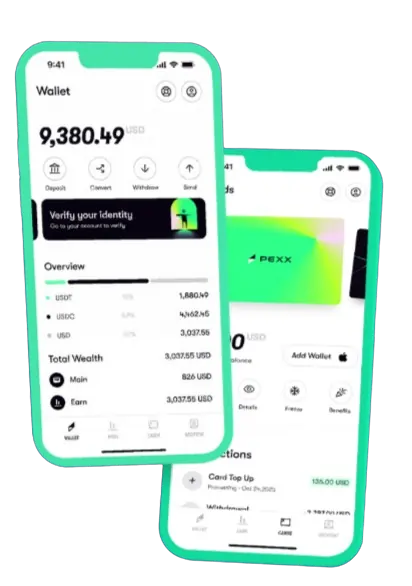
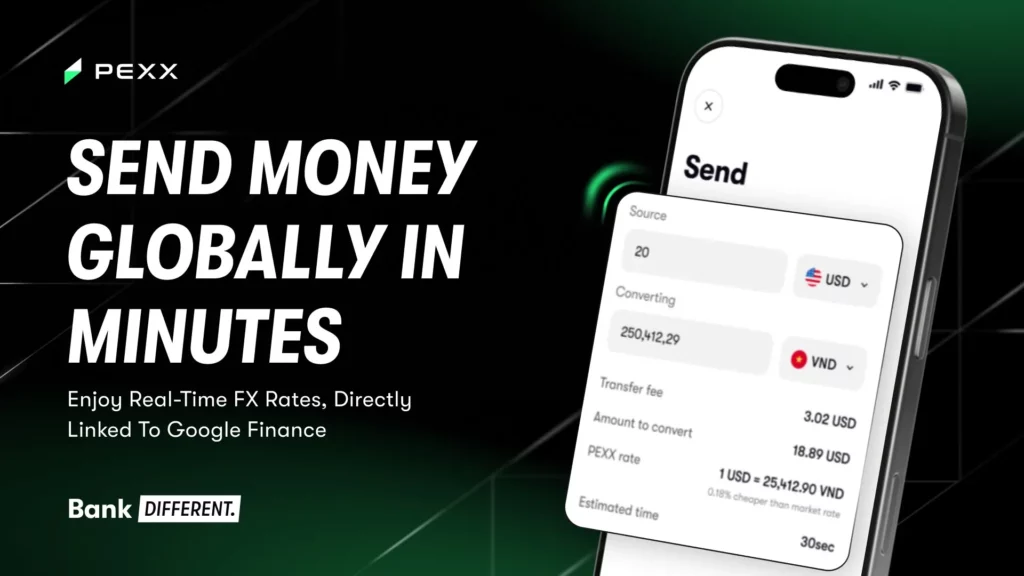
Q.6 Your transfer speeds—30 seconds to India, 2 minutes to Vietnam—are dramatically faster than traditional corridors.
What’s the secret sauce behind your stablecoin payment infrastructure, and how sustainable are these speed advantages as competitors catch up?
We preroute transfers through the cheapest compliant stablecoin (often USDC on Stellar), pre-fund payout pools in local currency, and use a smart-order router that selects the quickest rail per corridor. Because we hedge FX in real time, we don’t wait for nostro reconciliation.
Competitors can copy individual pieces, but replicating the full stack—licences, on-chain risk checks, and multi-currency pools—takes years.
💳 The TradFi-DeFi Convergence
Q.7 You’re offering up to 3.5% APY through tokenised U.S. Treasury Bills while competitors struggle with yield offerings. As stablecoins and T-Bills drive a $900 billion demand shock, how do you see this convergence reshaping both traditional finance and DeFi?
When stablecoins hold Treasuries, they become de facto money-market funds. Treasury Borrowing Advisory Committee papers already predict up to US$900 billion of extra T-Bill demand if stablecoins hit US$2 trillion.
That turns once-esoteric DeFi rails into a core funding source for the U.S. government and drags traditional asset managers on-chain. In parallel, DeFi gains a base yield that is transparent, dollar-denominated, and acceptable to regulators, shrinking the gap between Wall Street and Web.
Q.8 Critics argue that crypto promises financial inclusion but often creates new barriers.
How does PEXX’s “passport and phone” approach actually deliver on crypto’s original promise better than first-generation crypto companies?
First-gen platforms assumed users would navigate private keys, CEX withdrawals, and gas fees. PEXX abstracts all that: scan your passport, pass SumSub KYC, and your USD wallet is live in five minutes; deposits can be local cash, card, or stablecoins. We handle custody, off-ramps, so inclusion is measured in onboarding time, not technical aptitude.
Q.9 Your pricing comparison shows users keeping 1-2% more on every transfer versus competitors like Wise and Western Union.
In key corridors, you’re beating established players by significant margins. What’s your moat, and how do you maintain this pricing advantage as you scale?
Wise’s global average fee hovers around 0.7 % plus a small flat charge, while Western Union’s total cost (fees plus FX mark-up) can reach 3–5 % on popular corridors. PEXX prices at a flat 0.50 %. As we scale, network effects let us negotiate cheaper local clearing and pass savings straight through to users—locking in the spread.
Q.10 Traditional banks are finally waking up to the cross-border payments opportunity, while fintech giants have massive resources. What’s your 18-month strategy to maintain your competitive edge as this space inevitably becomes more crowded?
We will triple corridor coverage to forty-plus currencies, extend our public API so payroll and affiliate platforms can embed PEXX in-app, and launch branded stablecoin cards for instant spend.
Concurrently we are pursuing an e-money licence in Europe and a VASP licence in Hong Kong to secure regulatory passports before larger incumbents finish their sandbox pilots.
Q.11 You’re AUSTRAC-registered in Australia and MSB-registered in the US, with partnerships with Fireblocks and Ripple.
How do you balance regulatory compliance with the “move fast” mentality needed to capture this market window?
Onboarding is fully automated through SumSub’s KYC stack—ID, face match, watch-lists—so humans only review edge cases.
Every transfer then passes two monitoring layers: blockchain analytics flag sanctioned or mixer-linked addresses in real time, and our internal engine profiles sender-receiver patterns for velocity, geography and counterparty risk. When an alert fires, the transaction auto-pauses pending analyst review, keeping us agile yet audit-ready.
Q.12 With your $4.5 million seed round led by TNB Aura, you’re expanding across Asia, Latin America, and the Middle East.
Which markets represent the biggest opportunities, and what localization challenges are you solving region by region?
India, Indonesia, Vietnam and Philippines lead for remittance volume; Mexico and Brazil for freelancer inflows; and the GCC for expatriate payroll.
Localisation means more than language: we integrate with each country’s instant-payment rail, map tax IDs to account structures, and partner with domestic custodians where capital-control rules restrict outbound FX.
Q.13 Looking ahead 3-5 years, do you envision a world where traditional USD banking becomes obsolete for globally mobile users? What does financial infrastructure look like when geography truly doesn’t matter?
For a growing slice of the workforce, yes. Once a borderless, yield-bearing USD wallet is as easy to open as a social-media account and universally spendable through cards and pay-outs, the notion of “choosing a home bank” fades.
Traditional institutions will still serve mortgages and complex credit, but day-to-day money will flow through tokenised cash and real-time clearing layers that care more about protocol compatibility than postcodes.
Q.14 This interview will reach the AFFMaven community – entrepreneurs and digital marketers who often juggle multiple international revenue streams, affiliate payments from various countries, and the constant friction of traditional banking.
What’s your message to AFFMaven audience about taking control of their financial infrastructure, and how do you see PEXX fitting into the toolkit of someone building a truly global business in 2025?
Stop letting geography tax your ambition. Whether you’re collecting affiliate revenue from five ad networks, paying contractors in three time-zones, or hedging stablecoin treasuries, PEXX turns every currency leg into a single USD ledger you control from your phone.
Onboard in minutes, keep more of every payout, and redeploy idle cash into tokenised Treasuries that earn while you sleep. In short: focus on growing traffic; we’ll make the money move like it’s sitting right next to you.
Our chat with Marcus gave us a clear view of borderless banking. With background in scaling firms like Oneflare and Zipmex, Marcus explained how PEXX provides quick USD access to assist digital nomads, freelancers, and remote workers in handling cross-border payments and remittances.
He noted that around 40 million digital nomads exist globally, with a total pool nearing half a billion when including cross-border freelancers and remote staff. Marcus highlighted the value of blending stablecoins with traditional rails for transfers that hit accounts in seconds, not days.

He also described how PEXX serves users in over 50 countries, cutting costs by 1-2% per transfer compared to options like Wise or Western Union through a flat 0.5% fee.
As remote work and global business expand, reliable tools for international revenue and multi-currency operations matter more than ever. Ready to streamline your financial flows with PEXX?
🚀 Get Exclusive Affiliate Marketing Secrets🚀
Discover the strategies, tools, and tactics used by the top 1% of affiliate earners!

Join 69,572+ Affiliates already leveling up their game
Affiliate Disclosure: This post may contain some affiliate links, which means we may receive a commission if you purchase something that we recommend at no additional cost for you (none whatsoever!)