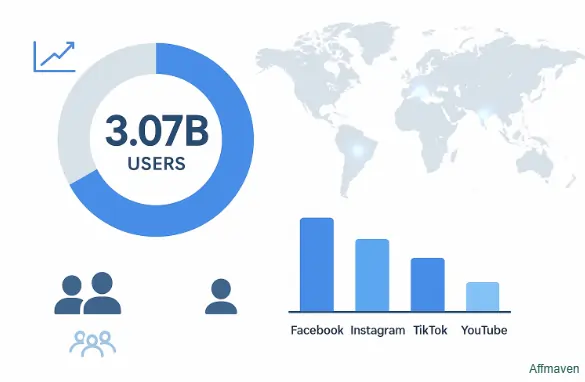
Facebook has 3.07 billion monthly active users and 2.11 billion people logging in daily, making it the biggest social network on the planet. That’s 37% of Earth’s population scrolling feeds, watching videos, and clicking ads every single month.
If you’re running ads, managing brand pages, or tracking social trends, knowing the latest Facebook statistics is non-negotiable for 2026 success.
From user demographics to ad performance benchmarks, we’ve collected fresh numbers across engagement rates, revenue projections, and mobile usage patterns.
Fun fact: Facebook users collectively spend 1.7 billion hours on the platform daily. That’s enough time to watch every movie ever made 200 times over.
📈 Top Facebook Statistics 2026 (The Shortlist)
🌐 Facebook’s Colossal User Base
The platform’s user count illustrates its immense global footprint. Billions of individuals log in monthly, making it a primary communication and information hub worldwide.
Facebook’s scale means it remains a central channel for reaching a massive and varied audience, connecting over a third of the world’s population each month.
🕒 Daily User Engagement and Activity
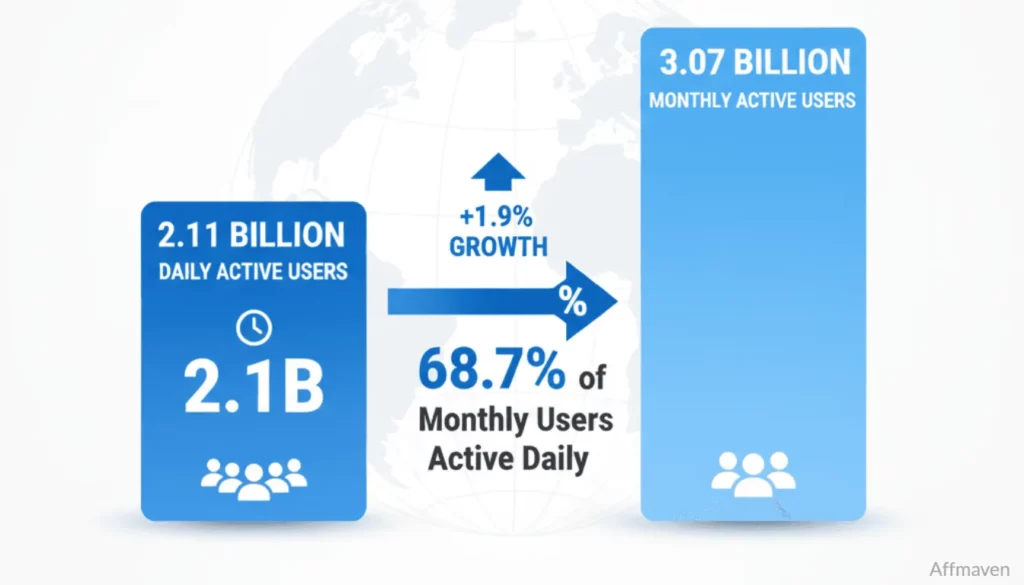
Daily activity is a strong indicator of platform health and user loyalty. A large portion of Facebook’s monthly users return to the platform every day, showing consistent engagement.
The high ratio of daily to monthly users shows that Facebook is not just a destination people visit occasionally, but a continuous part of many lives.
🌍 Geographic Distribution: Where Are the Users?
Facebook’s users are spread across the globe, with significant concentrations in Asia and the Americas. Understanding this distribution is key for international marketing and region-specific content.
| Country | Number of Facebook Users (in millions) |
|---|---|
| India | 383.5 |
| United States | 196.9 |
| Indonesia | 123.4 |
| Brazil | 111.65 |
| Mexico | 92.95 |
| Philippines | 90.75 |
| Vietnam | 76.2 |
| United Kingdom | 38.3 |
| France | 31.45 |
The data confirms that while the US is a major market, the largest audience is in India, with several other developing nations showing massive user counts.
🧩 Facebook Demographics: Age Breakdown
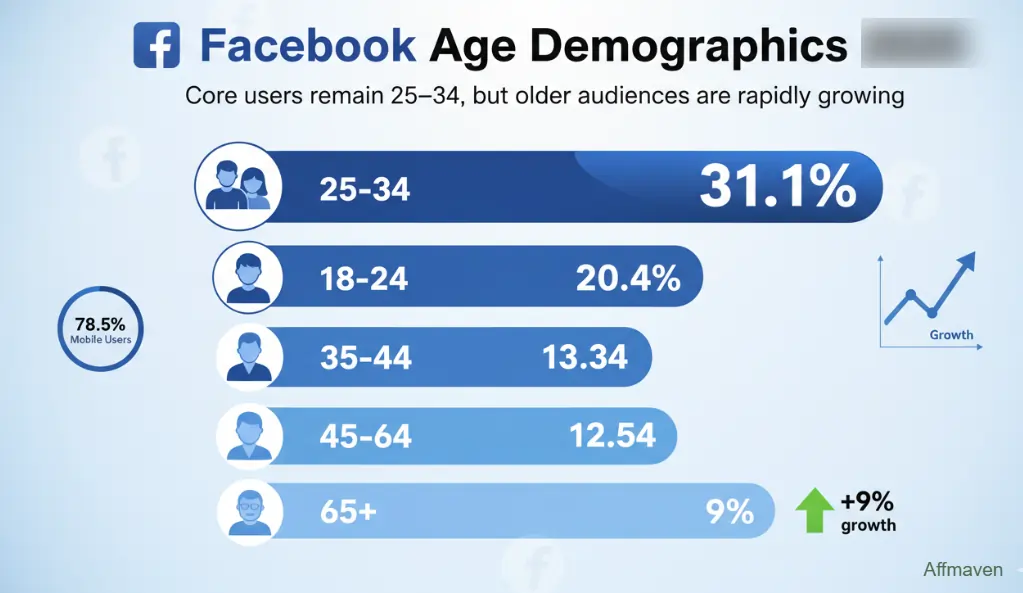
Age distribution of Facebook’s audience is a critical factor for audience targeting. While it has a reputation as a platform for millennials, its user base spans all adult age groups.
Facebook’s core audience remains young to middle-aged adults, but its growth among older users presents new opportunities for marketers.
👥 Facebook Demographics: Gender Split
Gender balance on Facebook varies by region. Globally, there is a slight male majority, but in some key markets like the United States, the opposite is true.
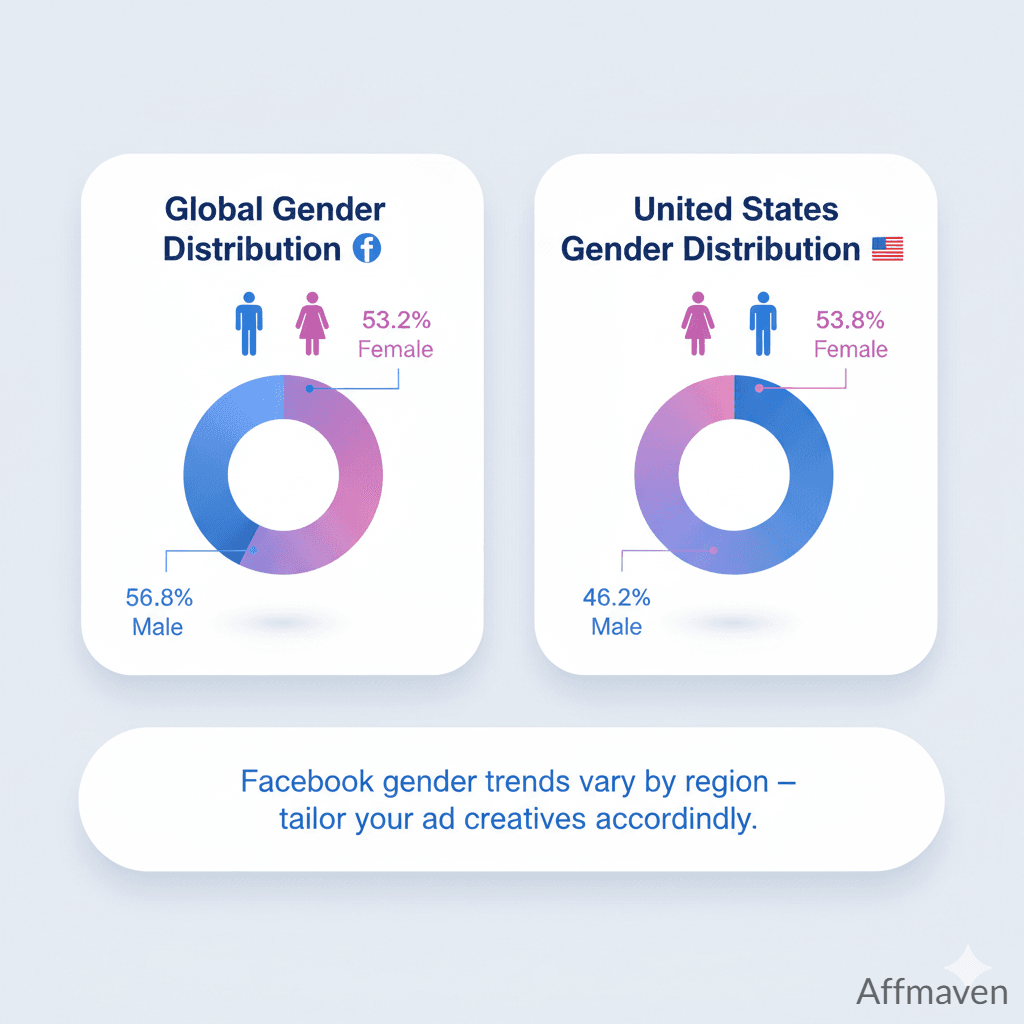
Understanding these gender distribution nuances helps in creating more effective and relevant advertising campaigns tailored to local demographics.
💵 User Demographics by Education and Income (US)
In the United States, Facebook usage is fairly consistent across different socioeconomic levels. The platform is popular among individuals regardless of their income or education.
Facebook’s broad appeal across socioeconomic lines makes it a versatile platform for reaching nearly every consumer segment in the US.
💬 How People Use Facebook: Usage & Behavior
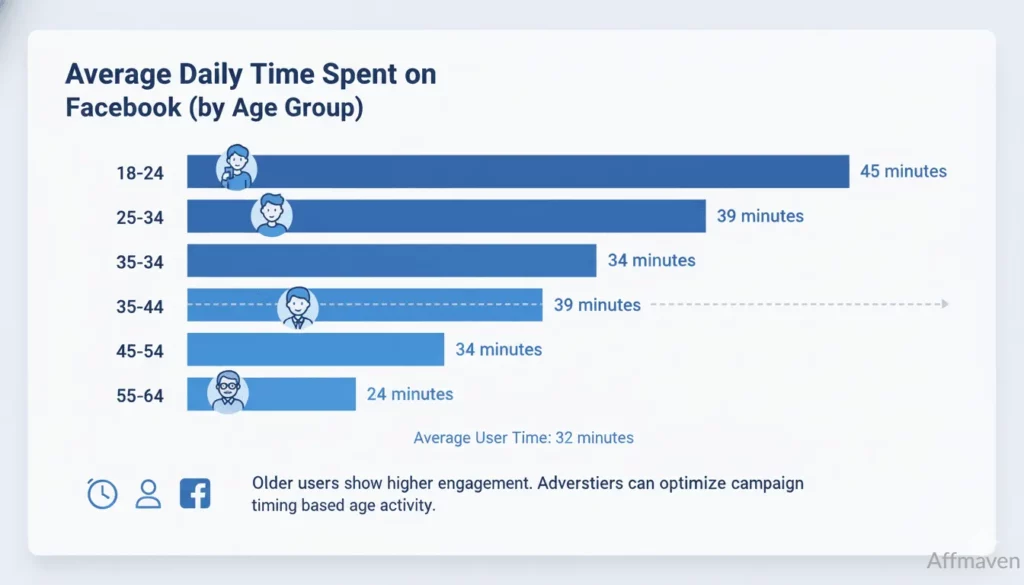
Beyond just logging in, how users spend their time on Facebook offers valuable insights. Time spent on the platform varies by age, with older users showing higher daily engagement.
These usage patterns are important for advertisers planning the frequency and timing of their campaigns to maximize visibility with their target audience.
🚀 The Dominance of Mobile Access
Mobile is the undisputed king of Facebook access. The vast majority of users interact with the platform on their smartphones, a critical fact for content and ad design.
Any successful Facebook strategy in 2026 must be built around the assumption that the audience is viewing content on a small, vertical screen.
🎯 Facebook Content Engagement: What Works?
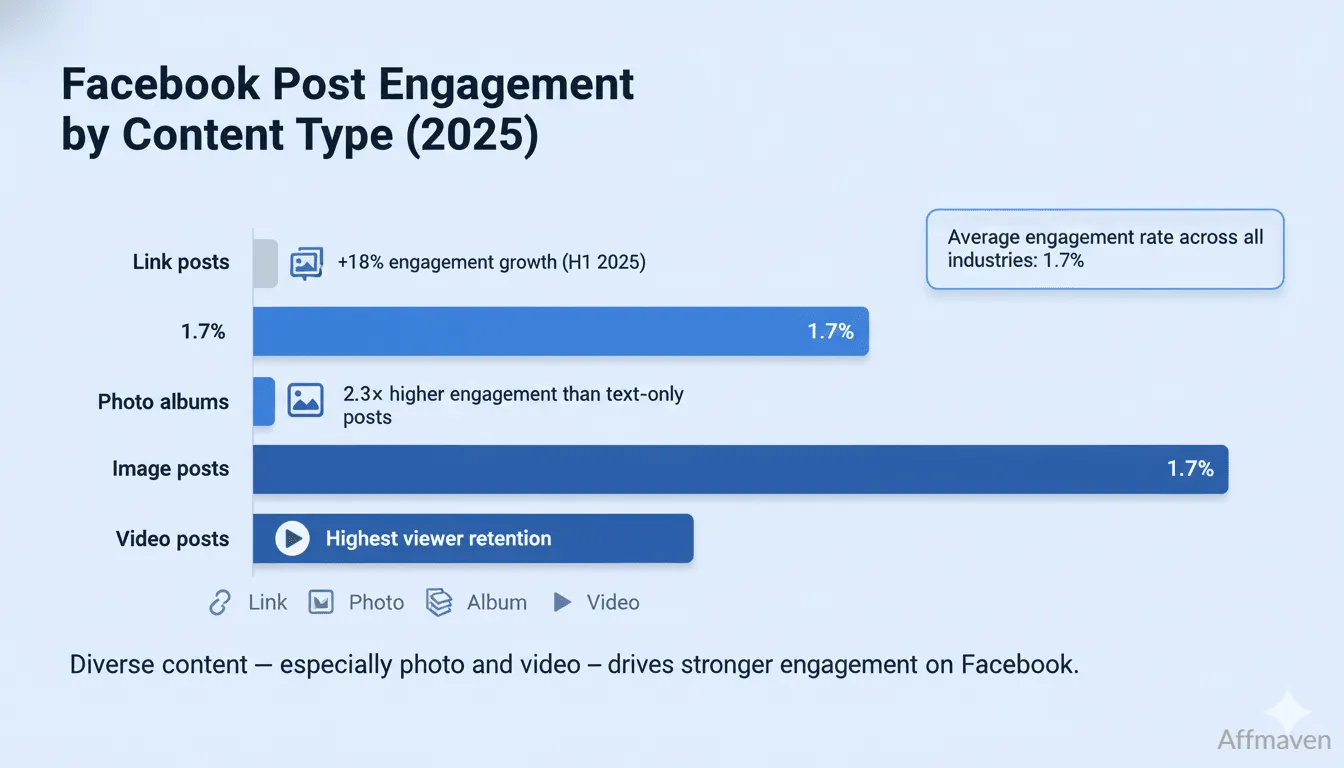
Understanding which content formats generate the most interaction is key to an effective organic strategy. While link posts are common, they don’t always drive the highest engagement.
A varied content strategy that includes high-quality images and videos is most likely to produce strong engagement results.
📹 The Power of Facebook Video
Video content remains a top performer on Facebook. It captures and holds user attention far more effectively than static content, making it a cornerstone of modern social media marketing.
Prioritizing native, short-form video content is essential for any brand looking to maximize its organic reach and engagement on Facebook.
🔴 Facebook Live Statistics
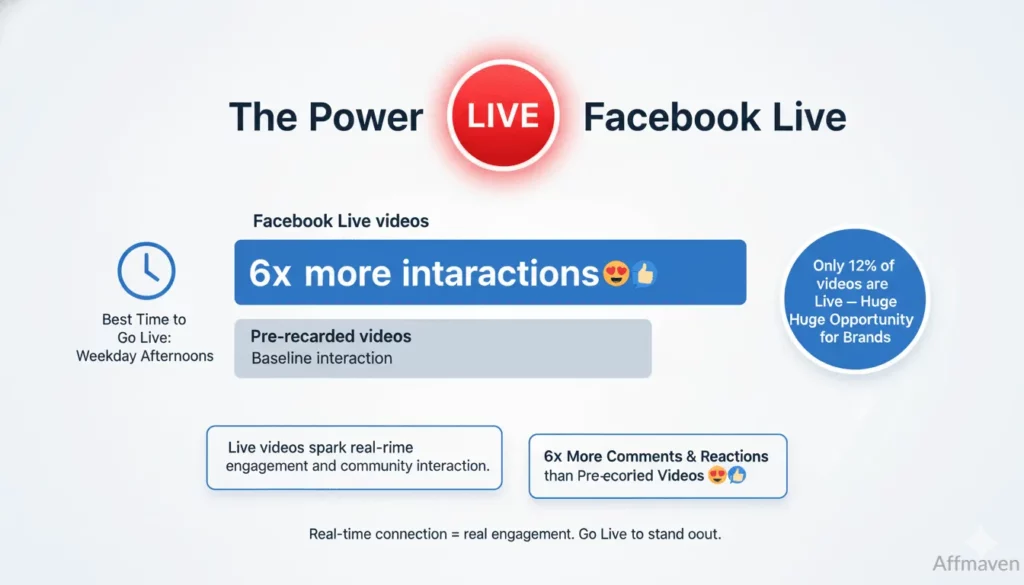
Facebook Live offers an interactive way to engage with an audience in real-time. Live videos generate significantly more comments and reactions than pre-recorded videos.
Using Facebook Live can be an effective way to capture immediate audience attention and foster a sense of community through real-time interaction.
📱 Facebook Stories Usage
Facebook Stories, the ephemeral content format that disappears after 24 hours, has become a popular feature. It offers a casual, full-screen way to share updates and connect with followers.
Stories provide a valuable channel for advertisers to present immersive, vertical video ads that feel native to the user experience.
🏢 Facebook for Business: Pages & Reach
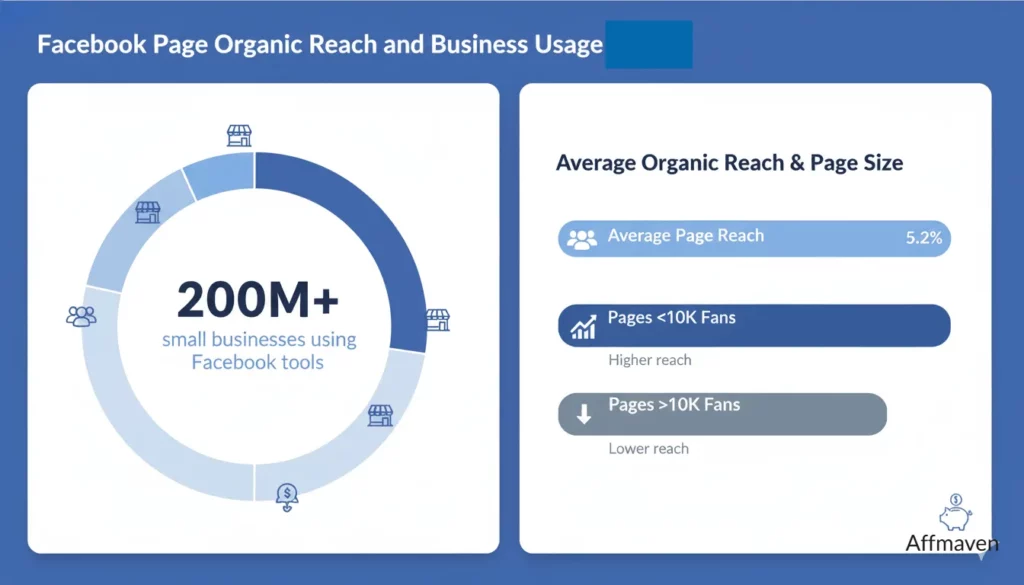
Millions of businesses use Facebook Pages to connect with customers. However, organic reach has become a challenge, requiring a strategic approach to content.
Given the low organic reach, a successful Facebook strategy for businesses typically involves a budget for paid advertising to ensure content reaches its target audience.
🌐 Facebook Advertising: Market Dominance
Facebook’s advertising platform is a financial powerhouse. Its massive revenue is fueled by millions of advertisers who rely on its detailed targeting capabilities to reach customers.
The platform’s continued revenue growth highlights its central role in the advertising industry and the value marketers place on its reach.
🌍 Facebook Ad Reach & Audience Size
The potential audience that can be reached with advertisements on Facebook is immense. This extensive reach makes it a go-to platform for campaigns of all sizes.
This massive addressable audience allows for both broad awareness campaigns and highly specific niche marketing efforts.
📊 Facebook Ad Performance Benchmarks
Understanding typical ad performance metrics helps marketers set realistic goals and evaluate their campaign success. These benchmarks vary by industry but provide a useful baseline.
| Industry | Avg. Click-Through Rate (CTR) | Avg. Cost Per Click (CPC) | Avg. Conversion Rate (CVR) |
|---|---|---|---|
| Retail | 1.59% | $0.70 | 3.26% |
| Technology | 1.04% | $1.27 | 2.31% |
| Finance & Insurance | 0.90% | $3.77 | 4.11% |
| Health & Medical | 0.83% | $1.32 | 11.00% |
| Home Services | 1.2% | $2.93 | 9.0% |
| All Industries Average | 2.5% | $1.05 | 8.25% |
The high CPC in finance reflects intense competition, while the high CVR in health and home services points to strong user intent in those sectors.
📈 Return on Ad Spend (ROAS) on Facebook
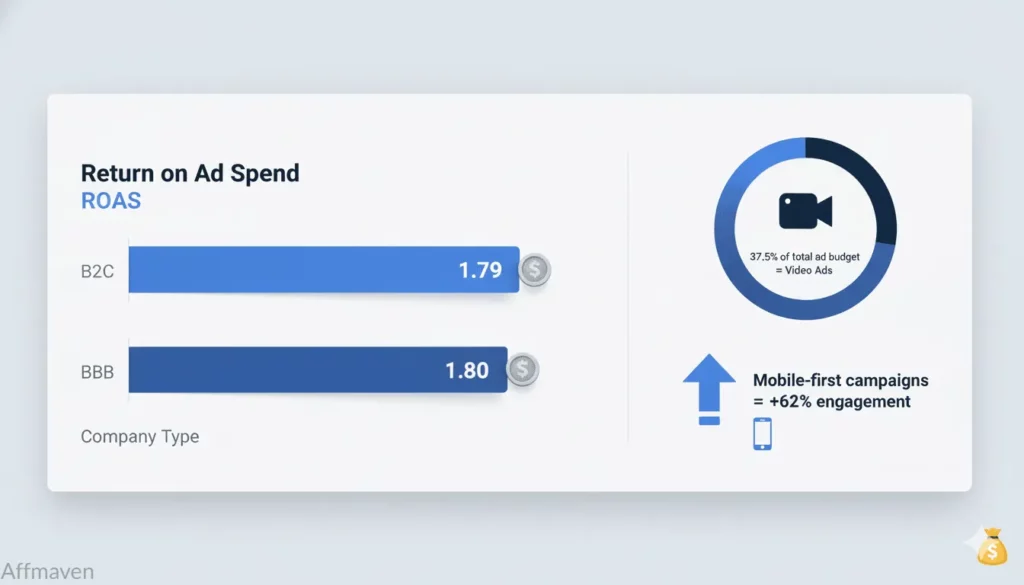
Return on ad spend is a critical metric for measuring the profitability of advertising campaigns. On Facebook, ROAS can be strong but depends heavily on the industry and campaign optimization.
Achieving a positive ROAS requires careful targeting, compelling creative, and continuous testing and optimization of ad campaigns.
💡 Meta’s “Family of Apps” Reach
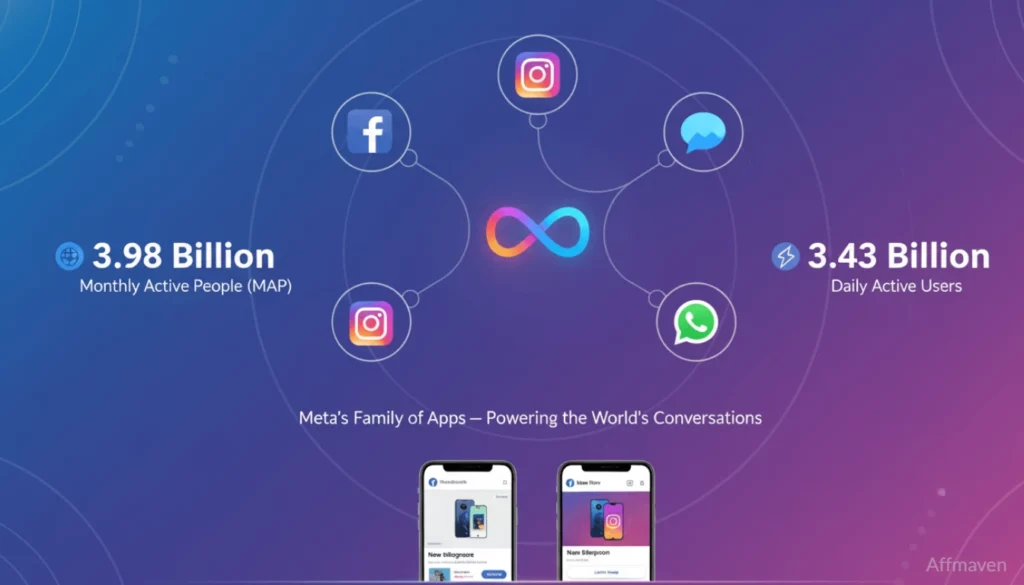
Facebook is part of a larger ecosystem of applications owned by Meta. The combined reach of these platforms is staggering, offering advertisers cross-platform opportunities.
The enormous, combined user base of Meta’s apps solidifies its dominance in the social media and digital communication space.
🚀 Actionable Insights From Facebook Statistics
Facebook isn’t slowing down anytime soon. With 2.11 billion daily logins and $123.73 billion in projected ad revenue, these numbers confirm why 200 million businesses bet their marketing budgets here.
No matter if you’re optimizing organic reach or scaling paid campaigns, understanding user behavior and ad benchmarks separates profitable strategies from wasted spend.
Now that you’ve seen what actually works in 2026, which Facebook stat will change your next campaign?
Stay Updated with Us
🚀 Get Exclusive Affiliate Marketing Secrets🚀
Discover the strategies, tools, and tactics used by the top 1% of affiliate earners!

Join 69,572+ Affiliates already leveling up their game
Affiliate Disclosure: This post may contain some affiliate links, which means we may receive a commission if you purchase something that we recommend at no additional cost for you (none whatsoever!)