Every affiliate chases big returns, but cheap traffic often brings a hidden price: affiliate fraud.
Your dashboard might show fantastic numbers, with clicks and conversions soaring. Behind the scenes, advertisers see zero sales, and suddenly, your payments are frozen.
This is traffic arbitrage fraud at its core. It is not just about bending rules; it is about delivering fake traffic that destroys advertiser relationships.
Learning to spot and avoid bot traffic and shady incentivized campaigns is vital. A clean traffic strategy is the only way to protect your reputation and ensure your business survives and grows.
What Fraud Really Means in Traffic Arbitrage
Fraud in traffic arbitrage is not just about breaking affiliate network rules. It destroys the trust between affiliates, networks, and advertisers. At its core, fraud involves delivering low quality or fake traffic disguised as genuine leads.
Advertisers pay for specific actions like clicks, registrations, or purchases. When they receive fabricated conversions created by bots, incentivized users, or dishonest tactics, they lose money while gaining nothing.
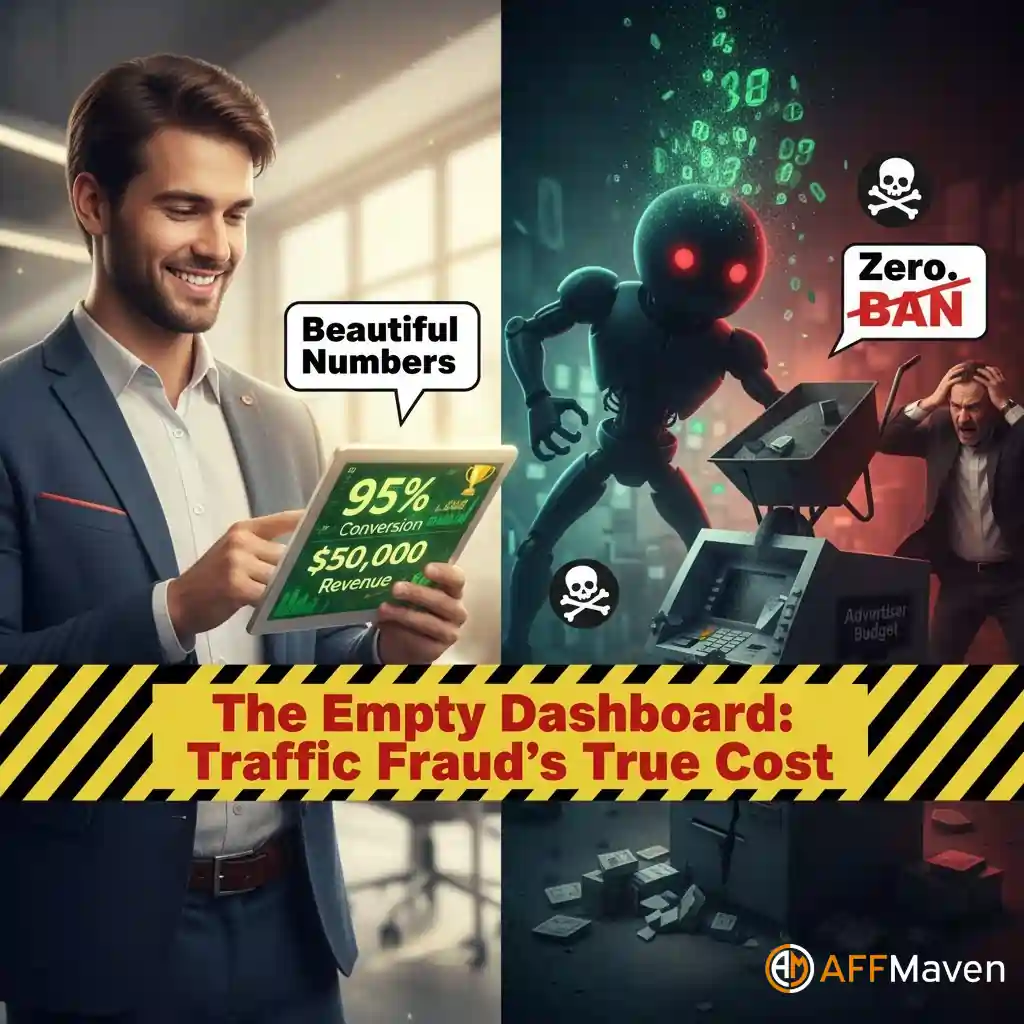
The statistics look impressive on paper with rising conversions, but the reality tells a different story. The advertiser gets zero sales, and the network hemorrhages budget. This is why fraud always results in bans and withheld payments.
The concept is simple yet devastating. Fraud creates an illusion of success. Your dashboard shows beautiful numbers, but behind those metrics lies a complete absence of genuine customer interest. Networks have become exceptionally skilled at identifying these patterns, making fraud an unsustainable approach.
The Most Common Types of Fraud Affiliates Encounter
Understanding what constitutes fraud helps affiliates avoid it, even accidentally. Many newcomers commit fraud without realizing it because they simply do not understand what qualifies as fraudulent behavior.
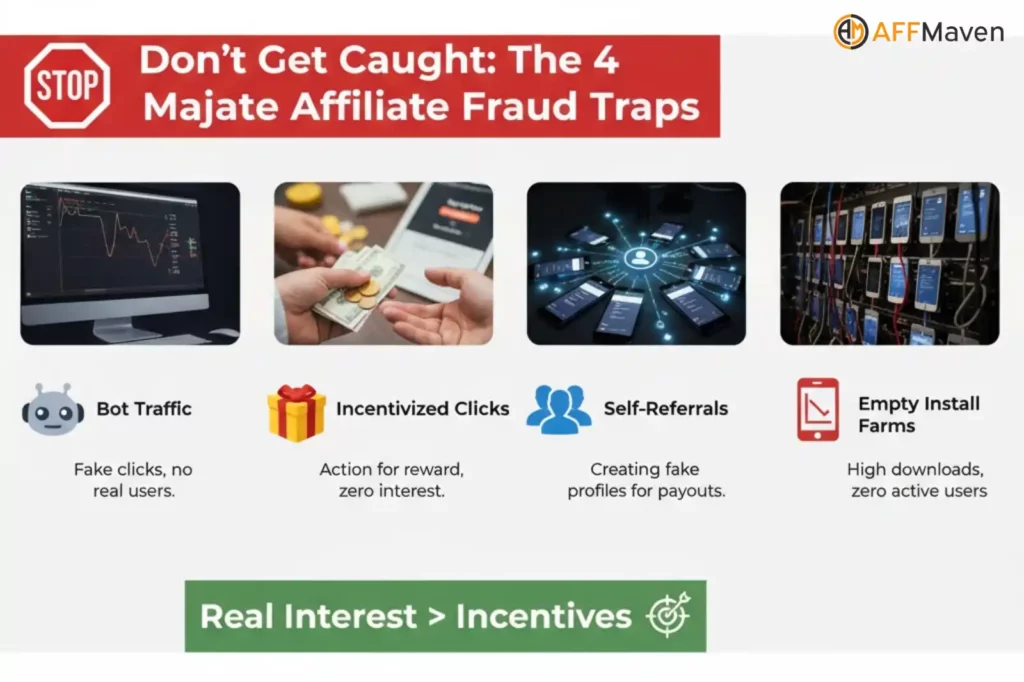
Bot Traffic and Automated Systems
Bot traffic occurs when software programs rather than real people execute actions on websites. These programs click links, complete forms, make purchases, or even deposit money. To the network, everything appears normal. However, these users never return, never engage, and never provide real value. This represents classic fraud that networks detect quickly through behavioral analysis.
Incentivized Traffic That Kills Conversions
Incentivized traffic involves users who complete actions solely for rewards like cash, bonuses, or cashback. The call to action reads something like “Register and receive 100 dollars.” Technically, you generated a lead. Realistically, zero genuine interest exists. Networks classify this as fraudulent traffic because it produces no actual sales despite appearing active.
Multi Accounting and Self Referrals
Some affiliates create multiple accounts and complete actions through their own affiliate links. This tactic appears frequently in gambling and betting verticals where affiliates make deposits from fake profiles to trigger CPA payouts. Networks identify these patterns through IP analysis, device fingerprinting, and behavioral tracking.
Install Farms That Generate Empty Numbers
Mass app installations from physical devices or emulators create impressive download numbers without active users. Sometimes real people execute these installations, other times automated software handles it. Either way, the result remains identical. Downloads exist but engaged users do not.
AFFMaven Insight: After testing hundreds of traffic sources over the years, we have learned that any traffic source requiring incentives to drive action will ultimately fail. Real users take action because they want the product, not because someone paid them to click.
How Networks and Advertisers Detect Fraudulent Traffic
Fraudulent traffic cannot hide for long. Even without sophisticated tools, fraud detection systems and network managers identify suspicious patterns almost immediately. Understanding detection methods helps affiliates ensure their traffic remains clean.
🚀 Get 20% Off on RedTrack for Three Months with Exclusive Coupon
Use RedTrack to keep your campaigns transparent and fraud-free. Its fraud detection and traffic tracking tools help you spot suspicious activity before networks do. You can also get 20% OFF for 3 months using our exclusive coupon code AFFNINJAMAX at checkout.
The Real Consequences Affiliates Face From Fraud
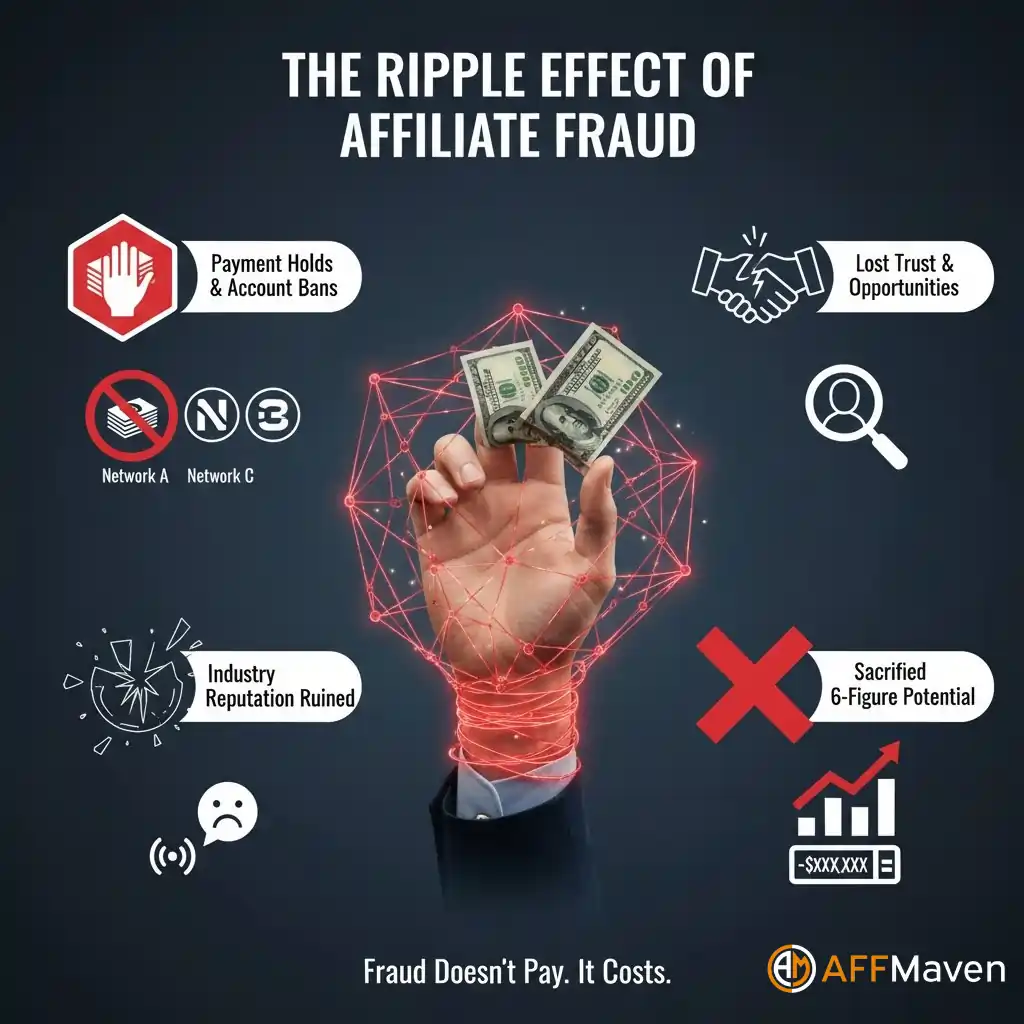
Committing fraud means playing against a system designed to catch you. Even if you initially receive payment, detection remains inevitable. The consequences extend far beyond a single withheld payout.
Immediate Payment Holds and Account Bans
Networks refuse payment when they detect suspicious traffic. Repeated fraud results in permanent account bans. Many networks maintain shared blacklists, meaning one ban can block access across multiple platforms permanently.
Loss of Trust and Future Opportunities
After fraud detection, affiliates lose access to premium offers, fast payment terms, and favorable conditions. Every future interaction begins with suspicion. Networks scrutinize everything, even when you run clean traffic.
Reputation Damage in the Industry
Information about fraudsters spreads quickly through the arbitrage community. After getting caught, finding quality partnerships or joining legitimate teams becomes nearly impossible. All this damage occurs for a few short term payouts that will eventually be reversed.
We have witnessed affiliates throw away six figure potential over a few hundred dollars in fraudulent earnings. Mathematics never works in favor of fraud.
Building a Clean Traffic Strategy That Networks Approve
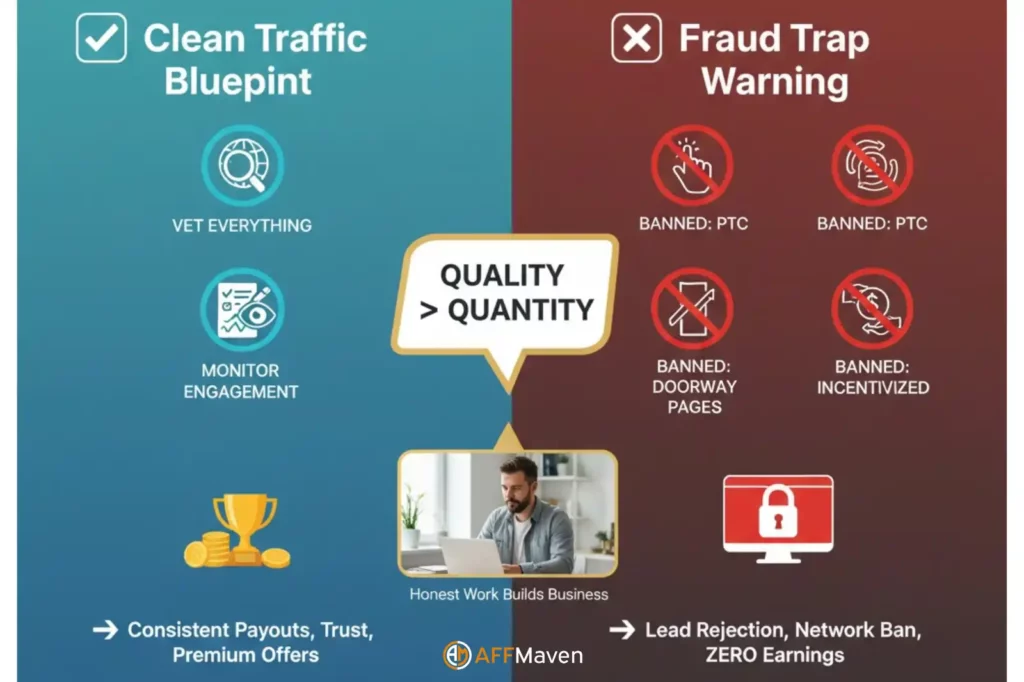
Fraud thrives where traffic source control ends. A single moment of overlooking source quality or attempting to accelerate results triggers network alerts. Avoiding fraud requires establishing clean, transparent processes from the start.
Vetting Every Traffic Source Thoroughly
Eliminate any incentivized traffic, paid to click platforms, suspicious ad placements, or doorway pages. These sources rapidly transform your traffic into fraudulent flow, triggering bans even on established accounts.

🚀 Get 20% Off on Anstrex Exclusive Coupon
Before sending any traffic, research and validate each source using Anstrex. It lets you analyze real campaigns, spy on top-performing creatives, and identify genuine ad placements. Affiliates can enjoy a 20% OFF lifetime discount using the exclusive coupon code AFFRANK_20.
Reading and Following Offer Rules Precisely
Every offer specifies allowed traffic channels and prohibited methods. Ignoring these requirements means working toward a ban. Networks reject leads when affiliates violate clearly stated terms.
Monitoring Audience Engagement and Quality
Track user behavior continuously. When users show no interest after clicking, never complete secondary actions, or abandon immediately, your traffic source produces garbage. Stop and rebuild your funnel before networks block your account.
The principle remains straightforward. Quality over quantity always wins. Clean traffic requires more effort but generates consistent payouts, increased trust, and access to premium offers. Fraud represents a fast track to nowhere, while honest work builds sustainable arbitrage businesses.
Why Avoiding Fraud Protects Your Long Term Success
Traffic arbitrage fraud wipes out profits faster than any bad campaign. Even one case of fake leads can cut future earnings by over 60% and damage trust across multiple networks.
Clean data, honest conversions, and verified sources keep payout cycles stable and affiliate accounts safe. Real growth happens when results match genuine user behavior, not inflated dashboards.
Smart affiliates already moved toward quality-first models. The question now is—how long can foul traffic tactics survive in a space built on trust?

Stay Updated with Us
🚀 Get Exclusive Affiliate Marketing Secrets🚀
Discover the strategies, tools, and tactics used by the top 1% of affiliate earners!

Join 69,572+ Affiliates already leveling up their game
Affiliate Disclosure: This post may contain some affiliate links, which means we may receive a commission if you purchase something that we recommend at no additional cost for you (none whatsoever!)