AI Visibility just became the biggest game-changer since Google first launched. We’ve tested over 200 brands across major AI platforms, and here’s what shocked us: 73% of companies are completely invisible in AI search results.
While everyone fights for traditional search rankings, smart brands quietly dominate AI-powered search conversations. ChatGPT handles 2.5 billion prompts daily, yet most businesses don’t even know if their brand appears in AI answers.
Keyword stuffing died the moment AI took over search. Now it’s all about search visibility in AI recommendations that guide customer choices. Time to claim your AI search dominance?
🚀 Welcome to the new era of AI Visibility
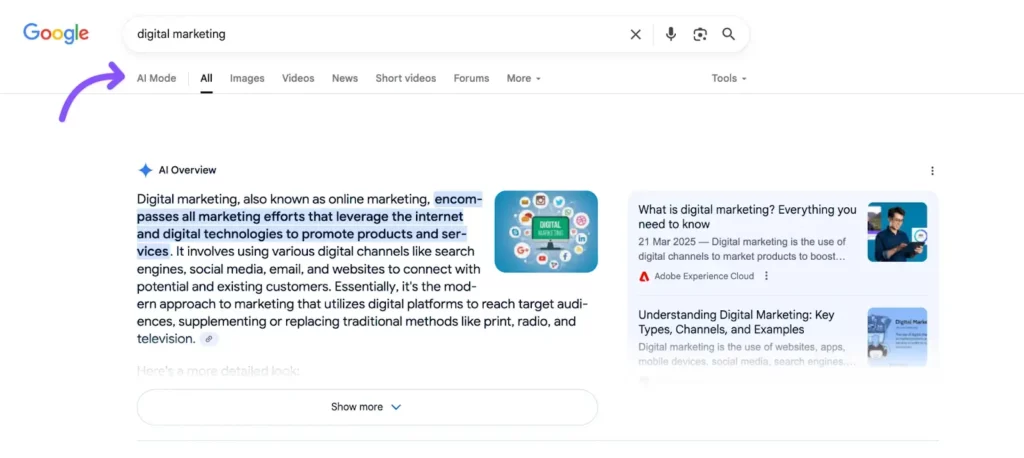
AI Visibility isn’t just another buzzword. It’s about how discoverable your brand is within the answers generated by Large Language Models (LLMs).
If you’re not showing up in these AI-powered conversations, you’re becoming invisible to a growing chunk of your audience.
To help marketers navigate this new territory, Semrush has launched the AI Visibility Index, a powerful benchmark that reveals which brands are winning in AI search and, more importantly, how they’re doing it.
🤖 What is the Semrush AI Visibility Index?
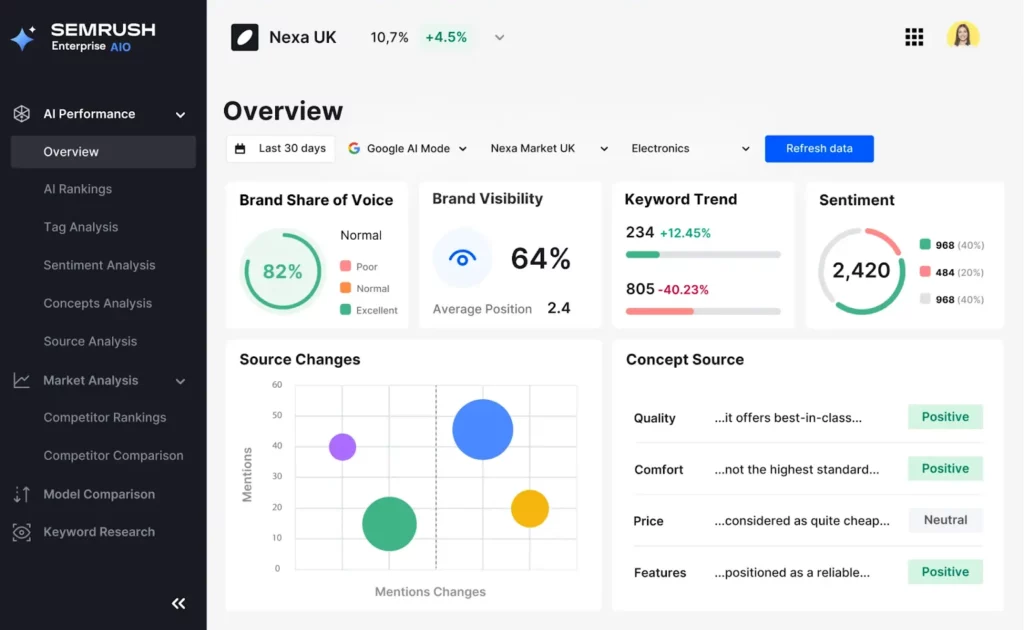
The AI Visibility Index goes beyond traditional search to capture how brands show up in the answers generated by LLMs.
It scans a vast dataset of queries and AI-generated answers, analysing how and where brands are mentioned, cited as sources, and ranked.
Using a combination of metrics, it helps marketers understand:
This granular level of insight is critical because AI-powered search doesn’t work the same way as traditional search engines. Ranking first on Google does not guarantee that your brand will be the one the AI chooses to include in its answers.
Think of the AI Visibility Index as a leaderboard for the age of AI search. It’s a free, data-packed resource from Semrush that measures and analyses brand performance across major AI platforms like ChatGPT and Google AI Mode.
Here’s a quick look at how it works:
The goal of the index is to give marketers a clear, actionable blueprint for turning AI visibility into a real competitive advantage.
📈 The Great “Source-Mention Divide”: A Critical Insight
Brands that manage to be both frequently cited and mentioned tend to have a stronger influence on purchase decisions. Citations feed the AI’s knowledge base, while mentions drive brand awareness and emotional connection.
This divide also highlights the importance of diversifying your digital presence. Brands seen only as sources might lack social proof or community engagement. Conversely, brands with many mentions but no credible sources might struggle to appear authoritative.
Brands with a strong presence on both fronts are the ones that often dominate their categories in AI searches and convert more users.
🎯 Applying this to Your Strategy
Focus on creating high-quality reference content like tutorials, white papers, and research reports that AI can cite as sources.
Simultaneously, engage actively in forums, social media, and review platforms to generate authentic brand mentions and conversations. This dual approach not only boosts your visibility but helps build trust and preference.
In fact, the index found that fewer than 25% of the most mentioned brands were also the most frequently sourced.
Let’s look at a real-world example. The B2B SaaS company Zapier is the number one cited source in the digital technology and software category. Why? Because it has a massive library of factual, how-to guides and tutorials.
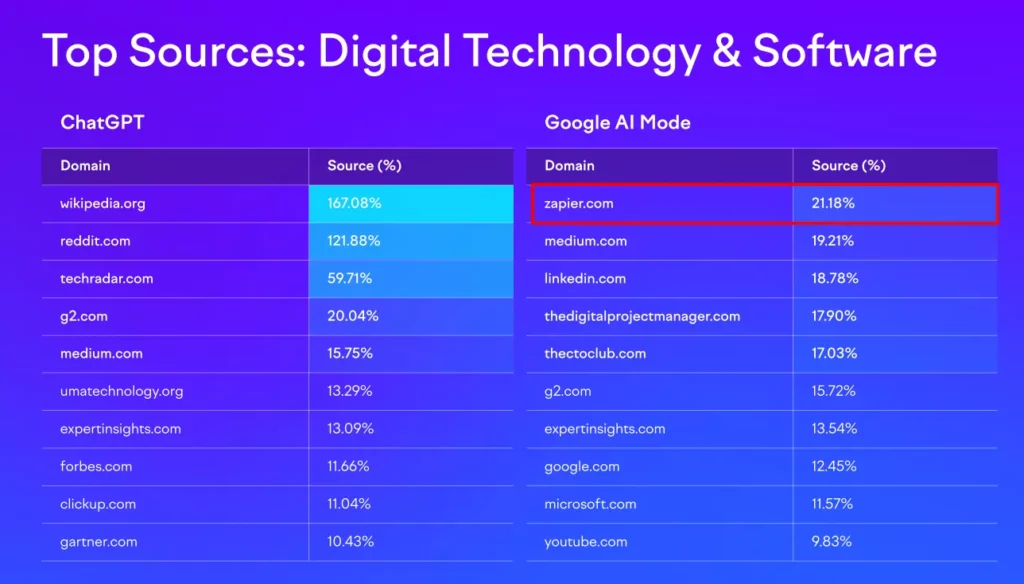
This is exactly the kind of “repository of facts” that AI models love to use as a source. However, when it comes to brand mentions in user reviews and online discussions, Zapier only ranked 44th.
🤔 What does this mean for you?
It means you need a two-pronged strategy. Publishing tonnes of high-quality, factual content on your own website is essential for becoming a trusted source.
But that alone is not enough. To earn mentions, your brand needs to be part of the conversation on other platforms that LLMs use to understand the world, like forums, review sites, and social media.
A single mention in an AI answer can be incredibly powerful. It’s not just one of ten blue links; it’s a curated recommendation presented as an authoritative answer, often to an audience that is highly motivated and close to making a purchase.
🤖 Why AI Visibility is a Game-Changer
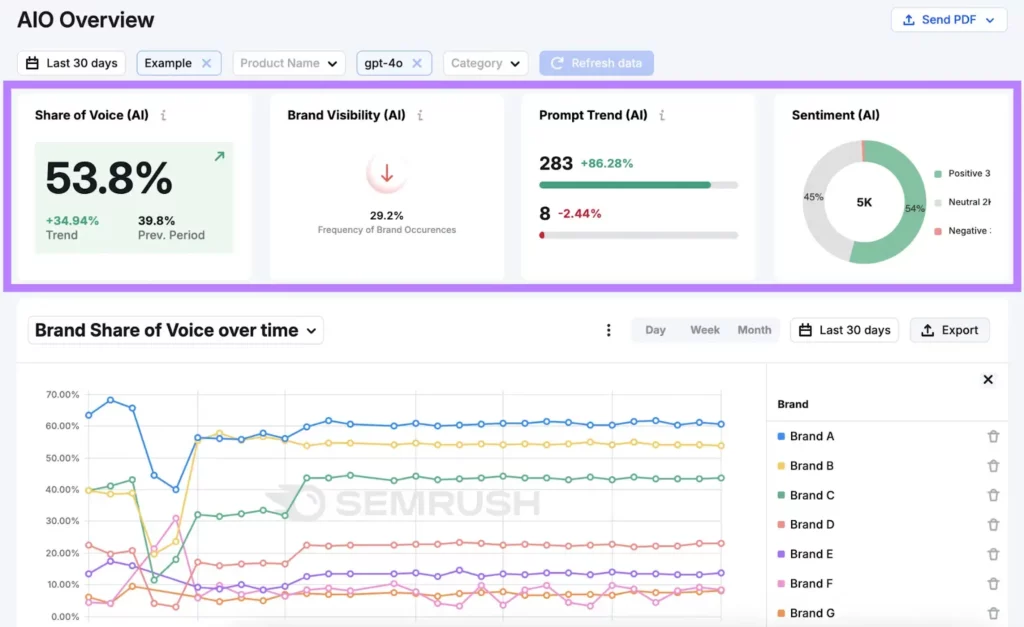
Source of Image: Semrush
Being visible in AI-generated answers affects revenue and growth. Brands top-of-mind in AI answers are often the ones customers choose.
With AI platforms acting as decision-makers or trusted advisors, your AI Share of Voice translates to real pipeline influence.
Experts predict that by 2028, AI-driven search may surpass traditional search traffic, shifting how marketers allocate budget and resources.
This means brands failing to secure strong AI visibility may see a decline in traditional traffic and miss out on high-intent customers who depend on AI recommendations.
💎 Grab Semrush Pro Free for 14 Days + 17% OFF Annual Plans!

We have partnered with Semrush for Exclusive 14 Days Free trial on Pro plan.
Because AI interactions often start the customer journey but don’t always leave visible tracks, marketers need AI-specific tracking and attribution models to understand the true ROI of their efforts. Tools like Semrush’s AI SEO Toolkit are designed to capture these insights and help optimize for AI traffic.
Ignoring AI visibility isn’t an option. The numbers are staggering :
This shift is also changing the kind of traffic that reaches your site. Because AI can directly answer simple, informational queries, the visitors who do click through are often past the initial research phase. They are “high-intent” users who are closer to making a decision.
However, this creates a new problem: attribution. When someone learns about your brand from an AI platform and then later visits your site directly, that initial touchpoint is often invisible to traditional analytics tools. This is where AI-specific tools become crucial.
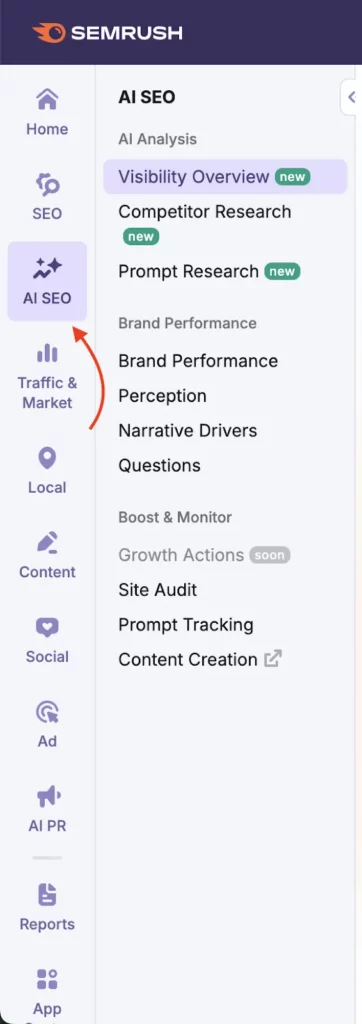
Semrush offers a suite of tools to tackle this:
✅ Your Actionable Checklist for Dominating AI Search
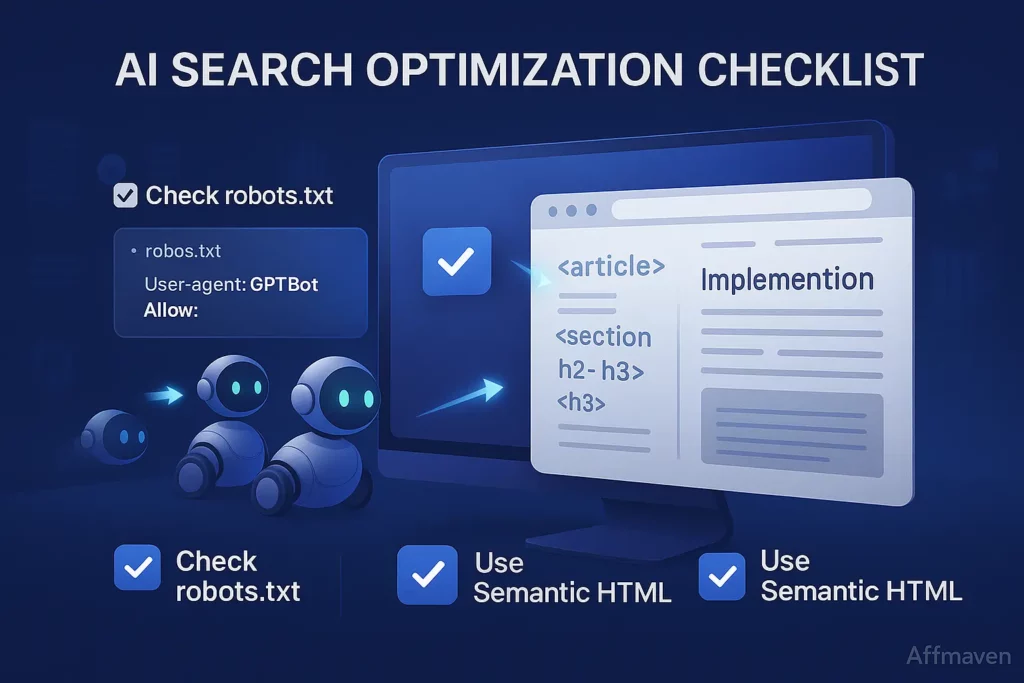
Alright, enough theory. Let’s get into the practical steps you can take to make sure your brand not only survives but thrives in the era of AI search.
1. Get Your Technical House in Order
User-agent: GPTBot
Allow:
Before you do anything else, you need to make sure AI crawlers can actually access and understand your site.
Use one <h1> for your main topic, <h2> tags for major sections, and <h3> tags for sub-points. Use HTML5 tags like <article>, <section>, and <nav> to give AI crawlers clear signals about your content's structure. A well-organised page is easier for an LLM to parse and quote.2. Create Content That LLMs Love
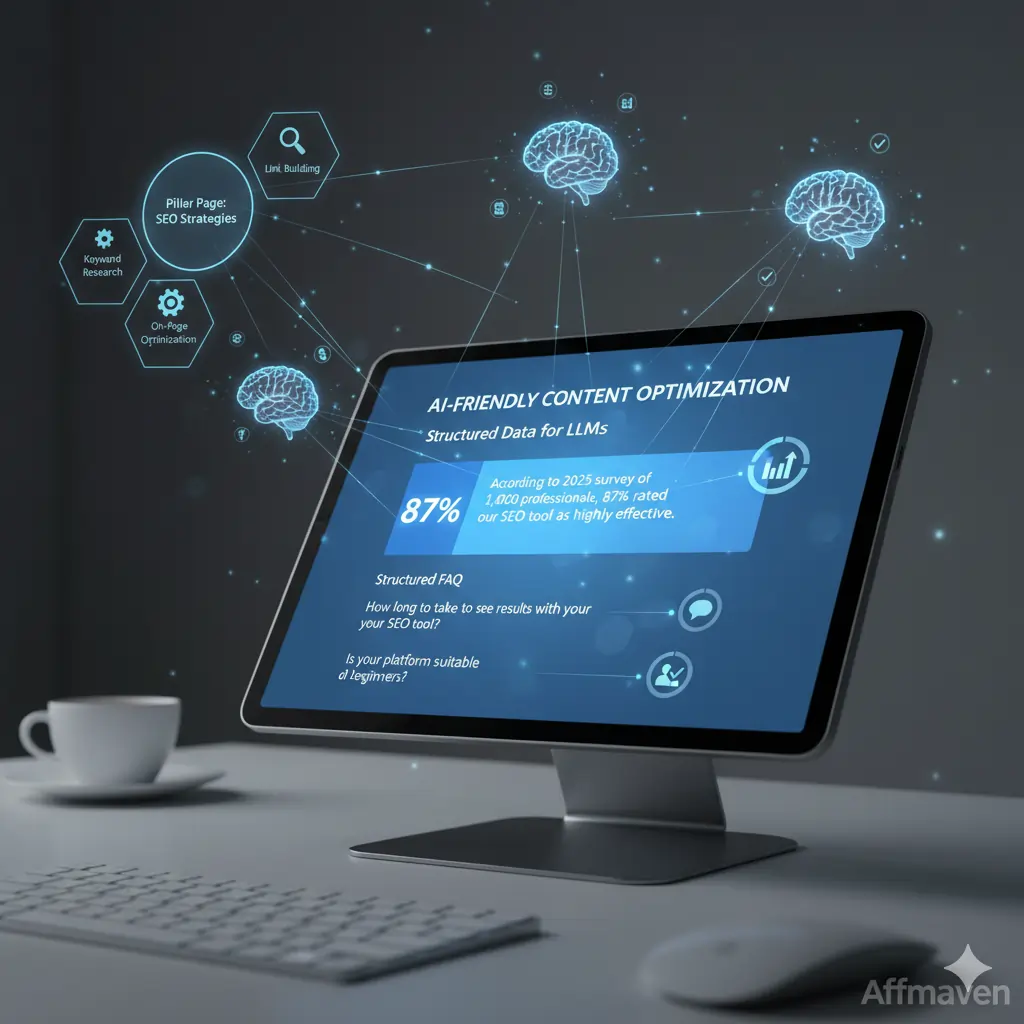
Examples
AI models are designed to find and surface clear, factual information. Fluffy marketing-speak gets ignored.
3. Build Authority Beyond Your Website
⭐ Review Management Best Practices
Media Partnerships
To get mentioned, you need to be part of the wider conversation online.
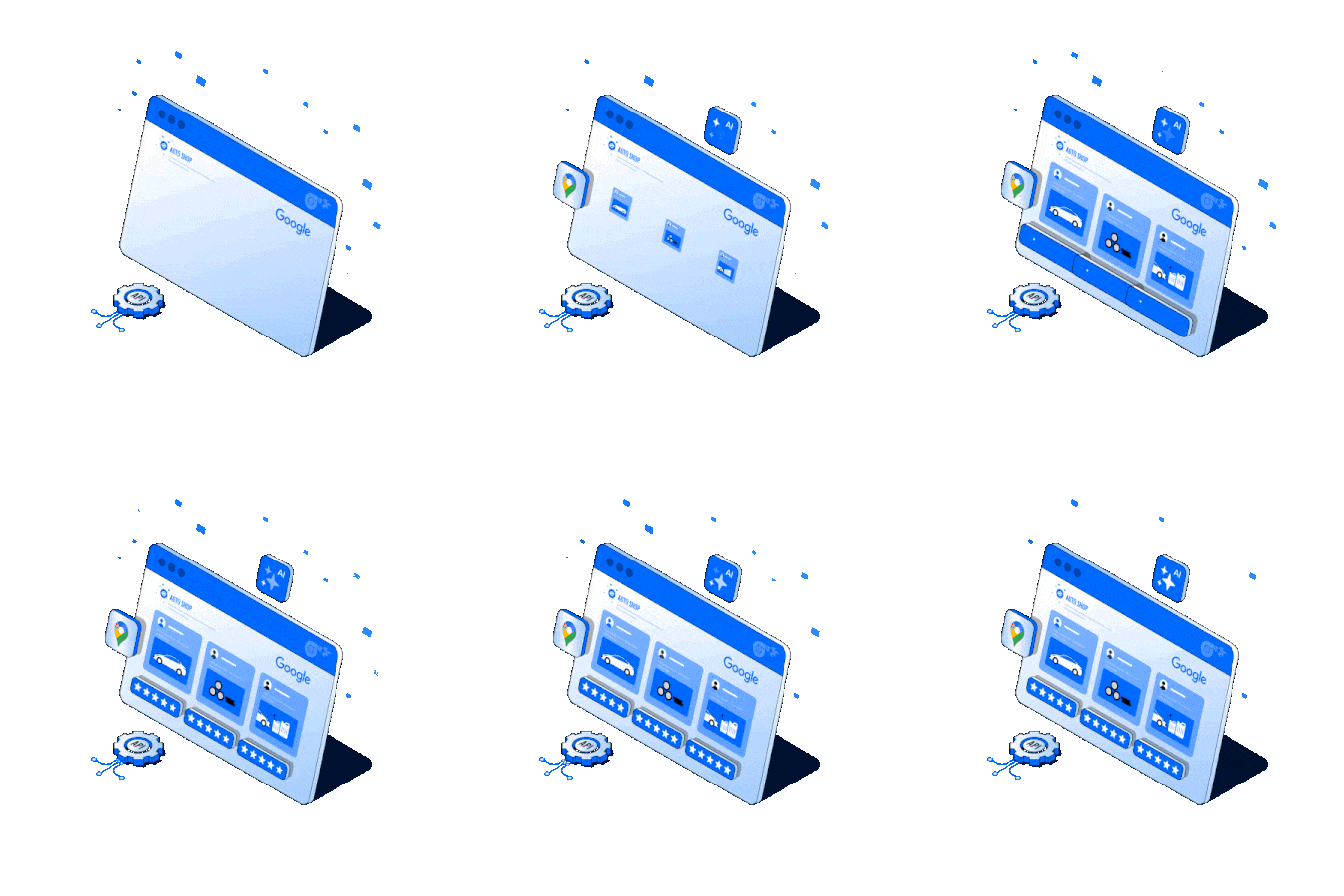
4. Monitor, Measure, and Adapt
⚙️ Why AI Optimization Tools Matter
AI visibility is not a “set it and forget it” task. You need to constantly monitor your position.
💡 Final Thoughts
AI Visibility changes everything about how customers find brands. While 91% of executives now ask about AI search performance, only 38% of companies actually track their AI mentions. The gap between traditional SEO and AI optimization grows daily.
Brands earning spots in AI-generated answers capture users at peak decision moments, while invisible competitors watch traffic disappear. Smart marketers already invest in AI search strategies because waiting means losing ground permanently.
Your competitors study AI visibility metrics while you optimize yesterday’s playbook. Will you lead this shift or follow from behind?
Stay Updated with Us
🚀 Get Exclusive Affiliate Marketing Secrets🚀
Discover the strategies, tools, and tactics used by the top 1% of affiliate earners!

Join 69,572+ Affiliates already leveling up their game
Affiliate Disclosure: This post may contain some affiliate links, which means we may receive a commission if you purchase something that we recommend at no additional cost for you (none whatsoever!)